Pet Urine in Carpet: How Enzyme Treatments Work and What Results You Can Expect
Understanding odors, permanent stains, and contamination beneath the carpet before choosing a treatment.
Dr. Carpet · Pet urine guide
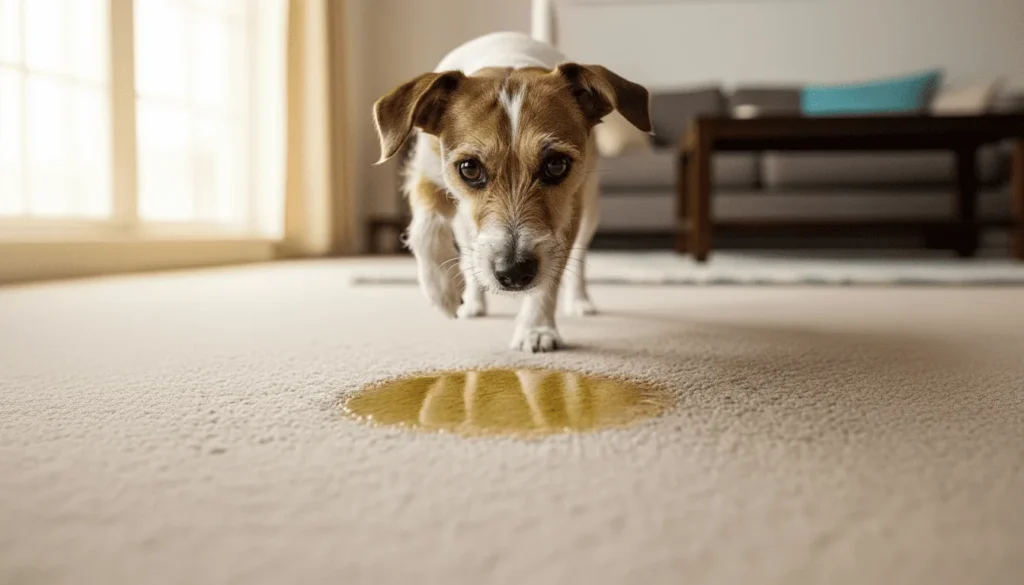
The stain looks better. Then the smell comes back.
You blot up an accident, clean the spot, and wait for the carpet to dry. The stain looks better, but a few days later the smell returns. Does that mean the carpet cannot be saved? Did the cleaning fail? Will an enzyme treatment solve the problem?
The answer depends on where the urine went, how long it has been there, and whether the treatment can reach the affected materials. At Dr. Carpet Cleaner, we believe you deserve clear answers before paying for treatment. Professional urine treatment can improve many situations, but complete odor and stain removal cannot be promised in every case.
The visible spot may be only part of the problem
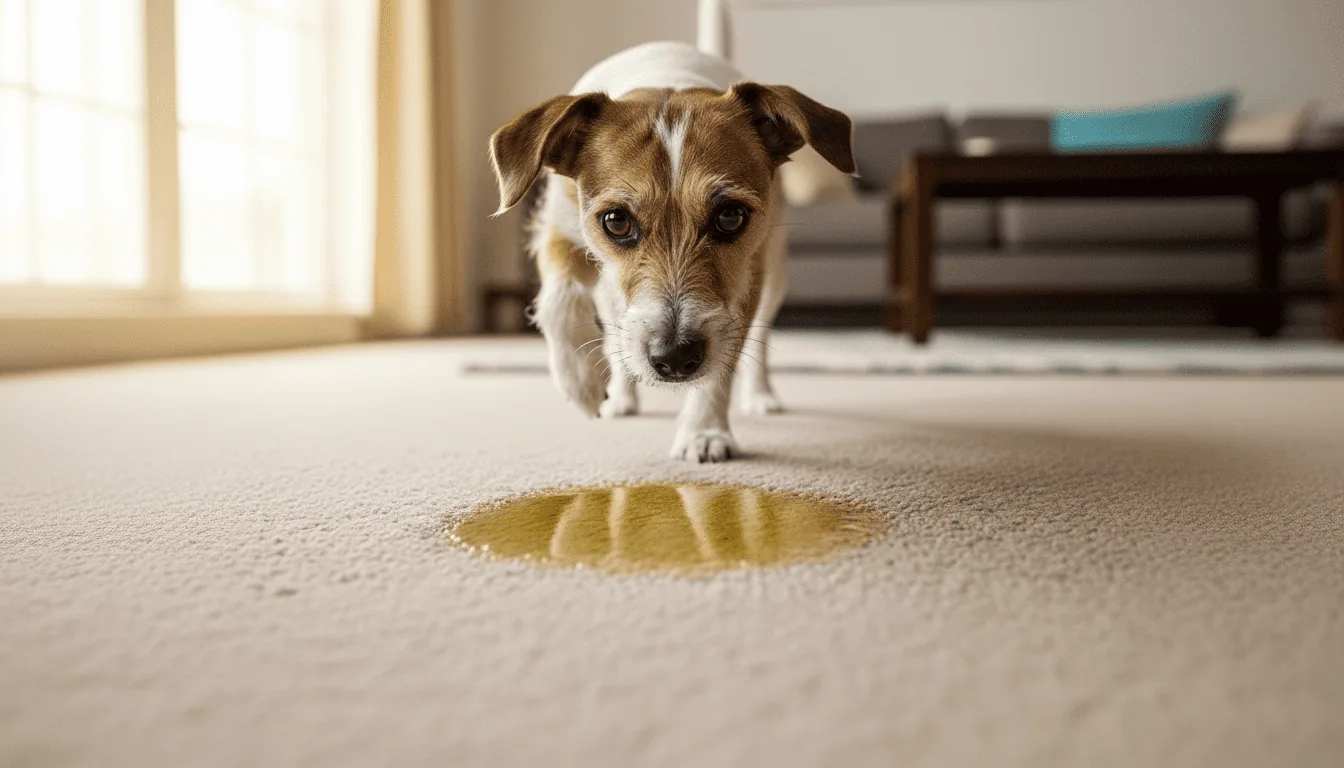
Carpet is a layered installation. Depending on the amount of urine and the construction of the flooring, contamination may affect:
Carpet fibers
The visible surface.
Carpet backing
The layers that support and hold the fibers.
Padding or cushion
The material beneath the carpet.
Subfloor
The wood, concrete, or other supporting surface below.
Liquid can spread beneath the carpet beyond the boundaries of the visible spot. Professional product guidance specifically warns that the affected area underneath may be substantially larger than the stain above. It also cautions against excessive treatment moisture on water-sensitive subfloors. Bridgepoint’s urine-treatment guidance.
Cleaning the surface does not necessarily treat everything underneath it.
Repeated accidents in the same location make the assessment especially important. What looks like one spot may represent multiple deposits in different layers.
What happens to urine as it ages?
Urine contains water and dissolved substances, including urea and salts. As it dries, water evaporates while residues remain.
Urine also changes chemically. Certain bacteria produce an enzyme called urease, which breaks down urea and contributes to ammonia formation and increased alkalinity.
Research on stored human urine documents these changes. Although those studies are not carpet-cleaning trials, they explain a relevant chemical mechanism behind the changing odor of aged urine. They do not establish an exact timetable for what happens in a particular carpet. Research on urea decomposition and microbial changes in stored urine.
For homeowners, the practical lesson is simple: a dried urine deposit has not disappeared.
Its condition depends on moisture, temperature, the materials involved, previous cleaning attempts, and whether new accidents continue to occur.
Why can the smell return on humid days?
The Carpet and Rug Institute notes that urine odors may reappear during high humidity, particularly when contamination remains or a product has only masked the smell. A pleasant fragrance immediately after cleaning is therefore not proof that the source has been removed. CRI’s technical bulletin on pet urine and carpet.

Does old urine create bacteria and germs?
Urine does not spontaneously create microorganisms. Bacteria may already be present or be introduced from the body, surrounding surfaces, or other contamination.
Microbial activity and survival depend on conditions. It would be misleading to claim that every old urine spot contains the same pathogens, or that bacterial numbers always increase as urine ages. Research shows that temperature, ammonia concentration, and other conditions can also reduce the survival of certain organisms. Research on bacteria and viruses in stored urine.
Odor alone cannot tell you which microorganisms are present or whether an area has been disinfected.
Persistent dampness is another concern. The IICRC explains that padding can remain wet even when surface fibers feel dry, creating conditions that may support mold growth. That does not mean every urine accident causes mold; it means moisture beneath the surface deserves attention. IICRC consumer carpet-care information.
We look for what the eye cannot see
- Rated Excellent on GoogleReal reviews from East Bay clients
- IICRC Certified FirmTrained technicians, licensed and insured
- Safe for kids and petsProducts matched to every fiber and surface
- Locally ownedServing Walnut Creek and the East Bay
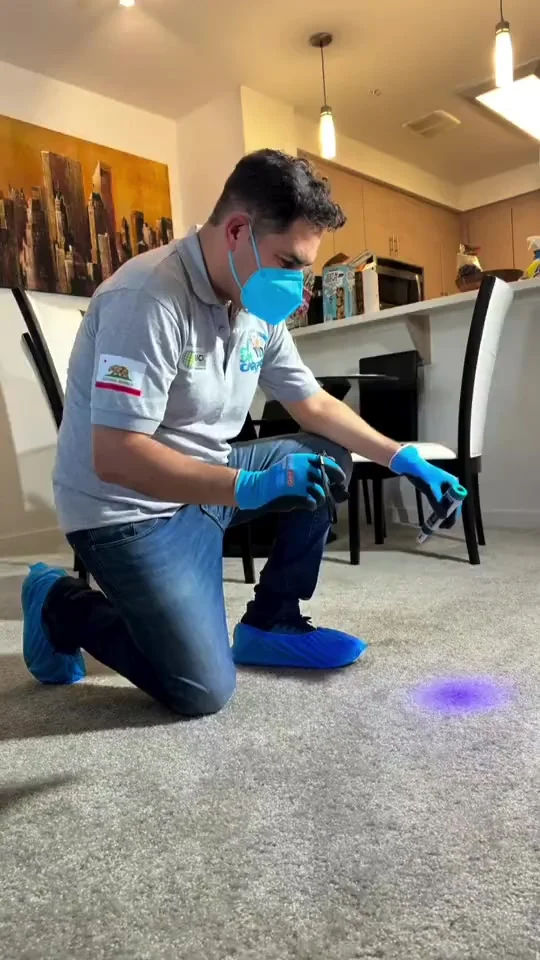
A UV light helps us find deposits before we treat. It is an inspection aid, not a cleanliness certificate.
Enzymes
How do enzyme treatments work?
Enzymes help break down specific substances through chemical reactions. Products sold for urine treatment vary: some use enzymes, some include selected bacterial cultures, and others combine cleaning agents with different odor-control technologies.
An enzyme product is not simply a fragrance sprayed over a smell. However, the word “enzyme” does not guarantee that every product will remove every urine component or work under every condition. The treatment must be appropriate for the contamination and compatible with the carpet.
Contact and working time matter
A treatment cannot act on a deposit it does not reach. It also needs the conditions and working time specified by its manufacturer.
For example, Pro’s Choice explains that its enzyme-based Odor-Zyme requires contact with the contamination and adequate moisture to continue working. Its instructions differ depending on the available treatment time. Pro’s Choice Odor-Zyme instructions.
There is no universal “spray it, wait ten minutes, and everything is gone” rule.
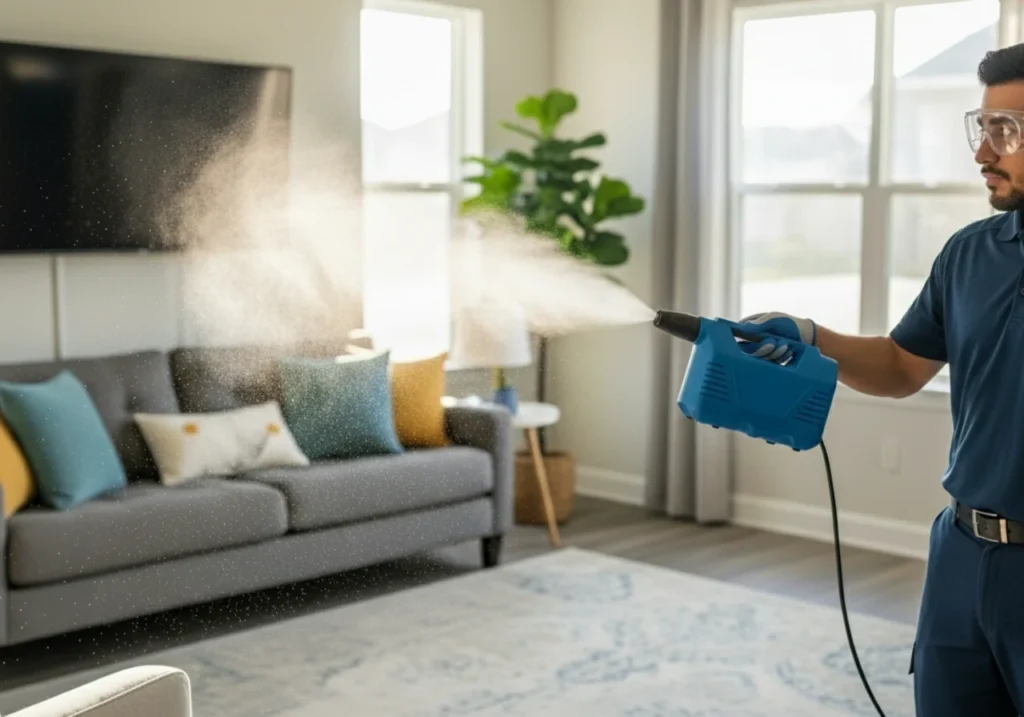
The correct application, dilution, temperature, dwell time, and extraction procedure depend on the selected product. Homeowners should not flood their carpet or deliberately keep it wet for days to make an enzyme product work.
Enzymes are one tool in a treatment plan
A professional may need to address several problems separately:
Residues
Deposits that need to be loosened and removed.
Odor sources
Odor-producing contamination in the fibers or below.
Visible staining
Discoloration that may or may not be removable.
Moisture and drying
Treatment moisture that must be controlled and removed.
Materials beyond treatment
Contaminated materials that cannot be effectively treated in place.
Some professional urine pretreatments use acidic cleaning chemistry to help dissolve deposits before extraction. This is a different function from biological digestion or stain removal. Pro’s Choice urine pretreatment information.
Other products use different combinations of cleaning and odor-control ingredients. For example, Legend Brands describes its Urine Contamination Treatment as a surfactant and odor-counteractant product suitable for several surfaces and urine sources. Legend Brands product information.
A professional should select the approach for the situation instead of assuming one product is the answer to every accident.
Removing odor is not the same as disinfecting
Three terms should remain separate:
Cleaning
Removes soil and organic material.
Deodorizing
Addresses an odor.
Sanitizing or disinfecting
Involves specific antimicrobial claims and procedures.
An enzyme treatment should not automatically be described as killing bacteria, viruses, or “all germs.” In the United States, antimicrobial claims depend on the product’s EPA registration and label directions, including the approved surface and required contact time. EPA explanation of cleaning, sanitizing, and disinfecting.
A product approved for a hard surface does not automatically provide the same result throughout carpet, padding, and subfloor.
A carpet that smells better is not necessarily disinfected, and disinfecting alone does not necessarily remove the odor source.
Why can urine stains become permanent?
Sometimes the visible mark is removable contamination. In other cases, urine has changed the carpet itself.
The IICRC explains that urine can alter textile dyes immediately or cause changes that develop over days or months. Aging urine can also damage some fibers. Cleaning may reveal existing discoloration previously concealed by soil. IICRC guidance on animal stains and odors.
The outcome depends on the urine’s composition, exposure time, fiber, dyes, and previous treatments. The Carpet and Rug Institute also describes how urine can change carpet color and damage backing bonds. CRI’s technical bulletin.
Removing a deposit cannot recreate dye that has been permanently altered or restore damaged fibers.
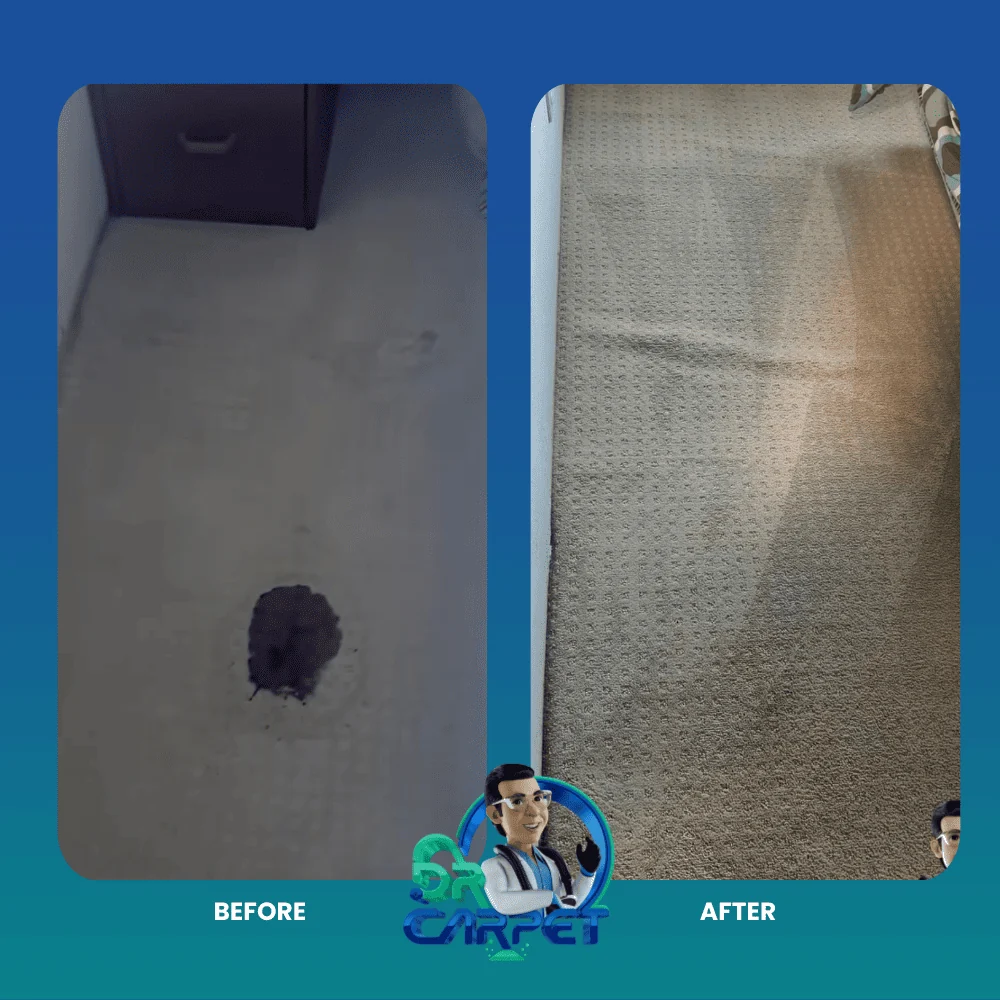
Specialized stain treatment may improve the appearance, but stain removal and odor removal remain separate goals. A stain can remain after successful odor treatment, and a visually clean area can still have an odor source below it. When color is the problem, carpet dyeing or a repair or patch may be the next conversation.
When does padding or subfloor treatment become necessary?
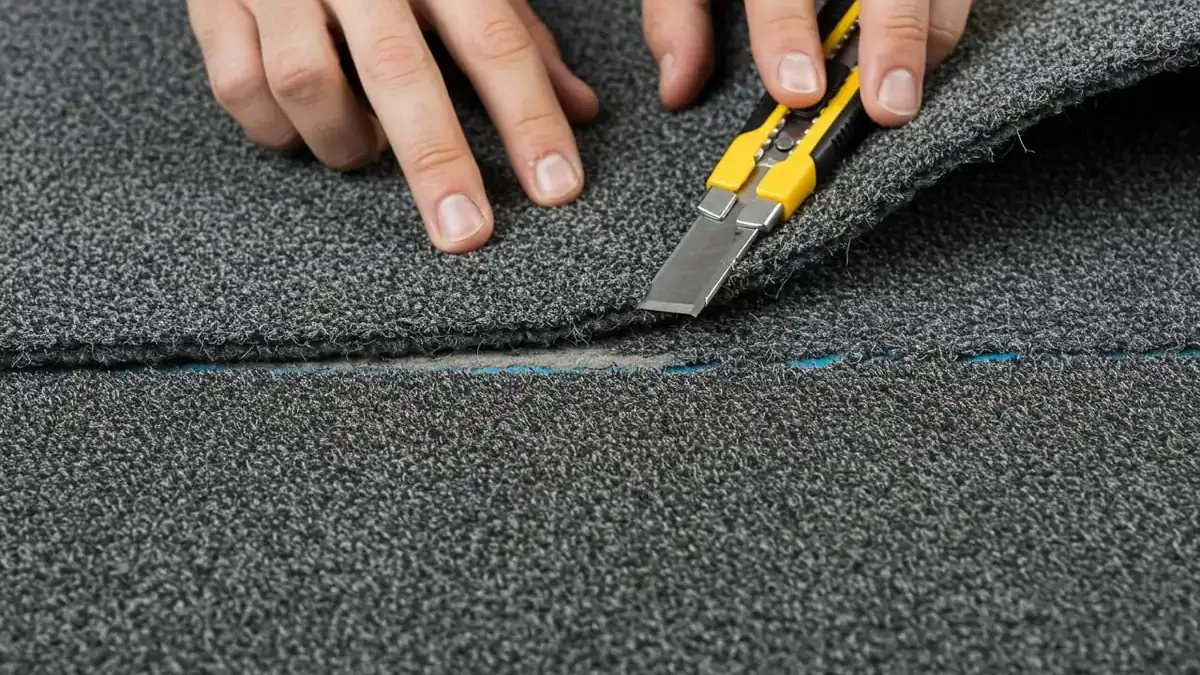
A more extensive assessment may be needed when accidents are repeated, odors persist after appropriate treatment, or contamination is suspected beneath the carpet. Depending on the findings, the recommended scope may include:
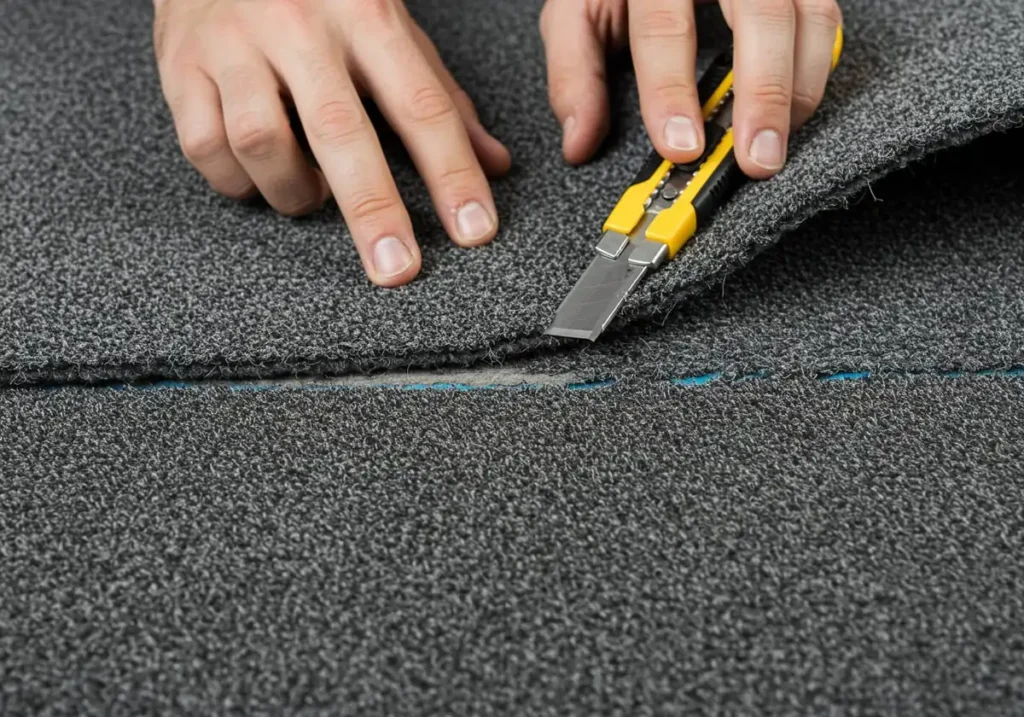
- Lifting the carpet to inspect underneath.
- Replacing affected padding.
- Treating accessible carpet backing and subfloor.
- Drying the exposed materials.
- Repairing or replacing damaged components.
- Replacing carpet when restoration is impractical.
These are possible next steps, not automatic requirements for every urine spot. A documented severe-contamination project from a treatment-product manufacturer illustrates how padding replacement, subfloor work, and treatment can be combined; it does not establish that every home needs that approach. Manufacturer case study of extensive urine contamination.
Replacing carpet alone may leave an untreated source underneath. Equally, subfloor replacement should not be recommended without assessing its condition.
The decision should follow the inspection and the agreed scope of work.
Why can’t every treatment come with a 100% guarantee?
Complete success depends on factors that may not be visible before treatment:
- The full location and depth of the deposits.
- Whether treatment can reach all affected materials.
- The quantity and age of the contamination.
- Permanent changes to fibers, dyes, or backing.
- Previous products applied.
- New accidents after the service.
Professional product instructions themselves emphasize complete contact and adequate working time. These are conditions of effectiveness, not details that can be skipped. Legend Brands treatment requirements.
A responsible provider should explain whether the proposed service is a localized treatment attempt, a more extensive extraction procedure, or a project involving access beneath the carpet.
What you can expect from Dr. Carpet Cleaner
- We discuss the history of the affected areas
- We explain the recommended treatment and its limitations
- We use appropriate products according to their instructions
- We identify what is included in the agreed price
- We explain when additional investigation or replacement may be necessary
- We provide aftercare guidance and assess concerns raised after drying
What we cannot responsibly promise in every case
- Complete removal of every stain or odor
- Restoration of permanently damaged color or fibers
- Removal of inaccessible contamination through surface cleaning alone
- Sterilization of the flooring system
- Prevention of future accidents
- A fixed percentage of improvement before assessing the situation
Honest expectations are part of professional service.
What about human urine?
Human urine accidents deserve the same respectful, practical assessment.
The amount, age, repetition, affected materials, and presence of other contamination matter more than the label “pet” or “human.” Some professional products are formulated for multiple urine sources, but product suitability and the required scope still need to be checked. Legend Brands urine-treatment applications.
Please tell us privately if the situation also involves blood, feces, sewage, or extensive contamination. That information can change the appropriate service and whether a specialist is needed.
There is no need for embarrassment. Accurate information helps us recommend appropriate care.
What should you expect after treatment?
Follow the drying and re-entry instructions provided for your service. Keep children and pets away from the treated area until those conditions are met.
Assess the outcome after the treatment has completed its specified working period and the materials have dried. Report persistent odors or returning spots rather than repeatedly applying additional chemicals yourself.
A blacklight is an inspection aid, not a cleanliness certificate. The IICRC notes that fluorescence may remain after professional cleaning and does not, by itself, prove incomplete urine removal. IICRC consumer guidance.
If a concern persists, the next step should be reassessment: an untreated location, deeper contamination, permanent damage, or a new accident may require a different response.

First hour
What to do when you discover a fresh accident
Act promptly:
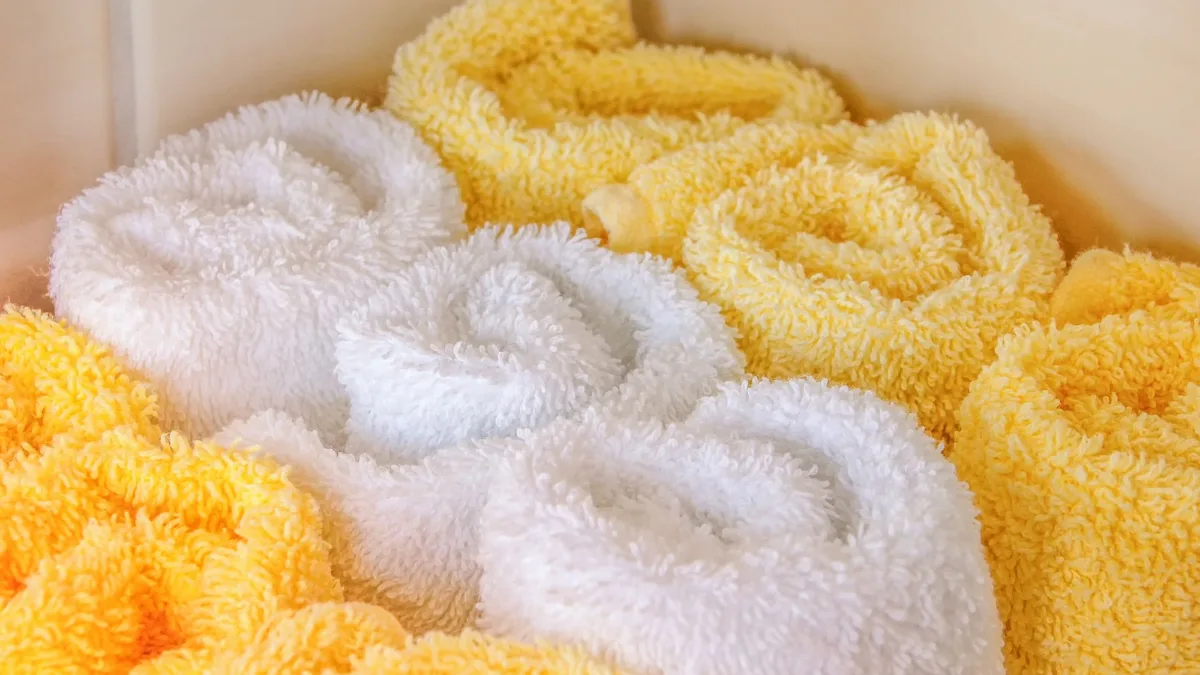
- Blot with clean, white absorbent towels.
- Avoid rubbing or spreading the liquid.
- Follow your carpet manufacturer’s spot-cleaning instructions.
- Avoid soaking the padding with repeated household treatments.
- Tell your cleaner which products you have already used.
Prompt attention can improve the prospects for stain removal. CRI guidance on pet accidents.
Do not mix cleaning products or add household bleach to other cleaners. The CDC warns that mixing bleach with ammonia or other cleaning chemicals can release dangerous gases. CDC cleaning-chemical safety guidance.
Why professional training matters
The IICRC’s S100 standard addresses professional carpet cleaning methods, chemistry, inspection, and stain removal. The organization also offers a separate Odor Control Technician certification covering odor sources, detection, and treatment options, including urine contamination. IICRC S100, IICRC Odor Control Technician certification.
Professional care involves recognizing both what treatment may achieve and when cleaning alone is insufficient.
Dr. Carpet Cleaner is an IICRC Certified Firm, and Pedro Andrade is an IICRC Certified Technician. We believe those credentials should be accompanied by clear explanations and realistic expectations.
Learn more about our pet urine treatment, odor control and area rug cleaning, or read what to do with pet urine on a wool rug over hardwood.
Real jobs
Urine, odor and stain work in action
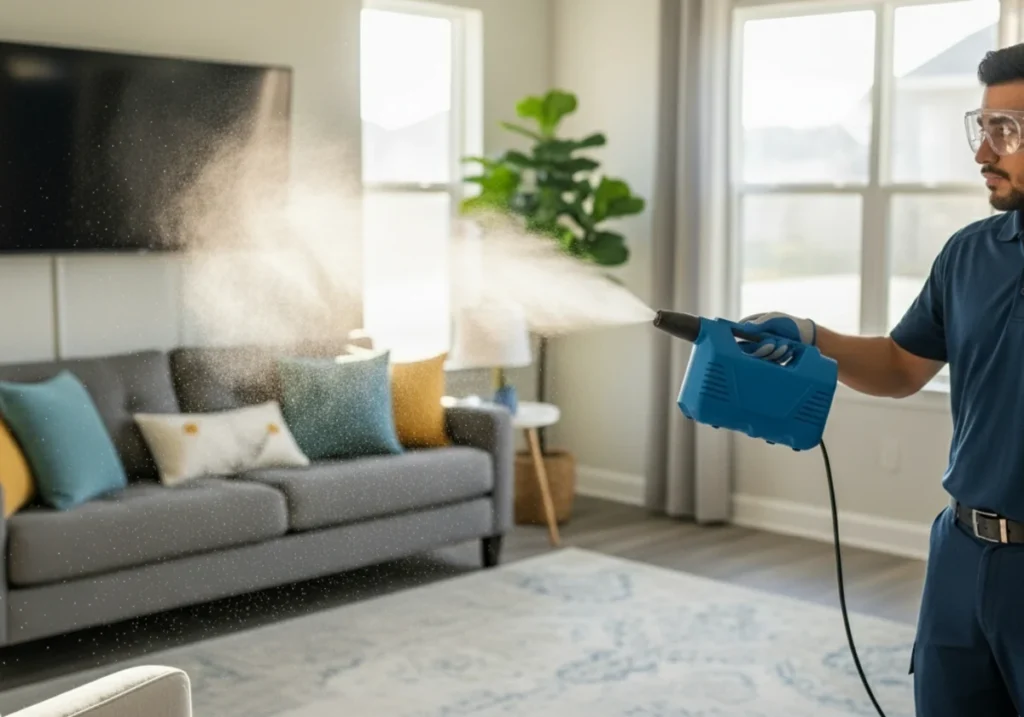
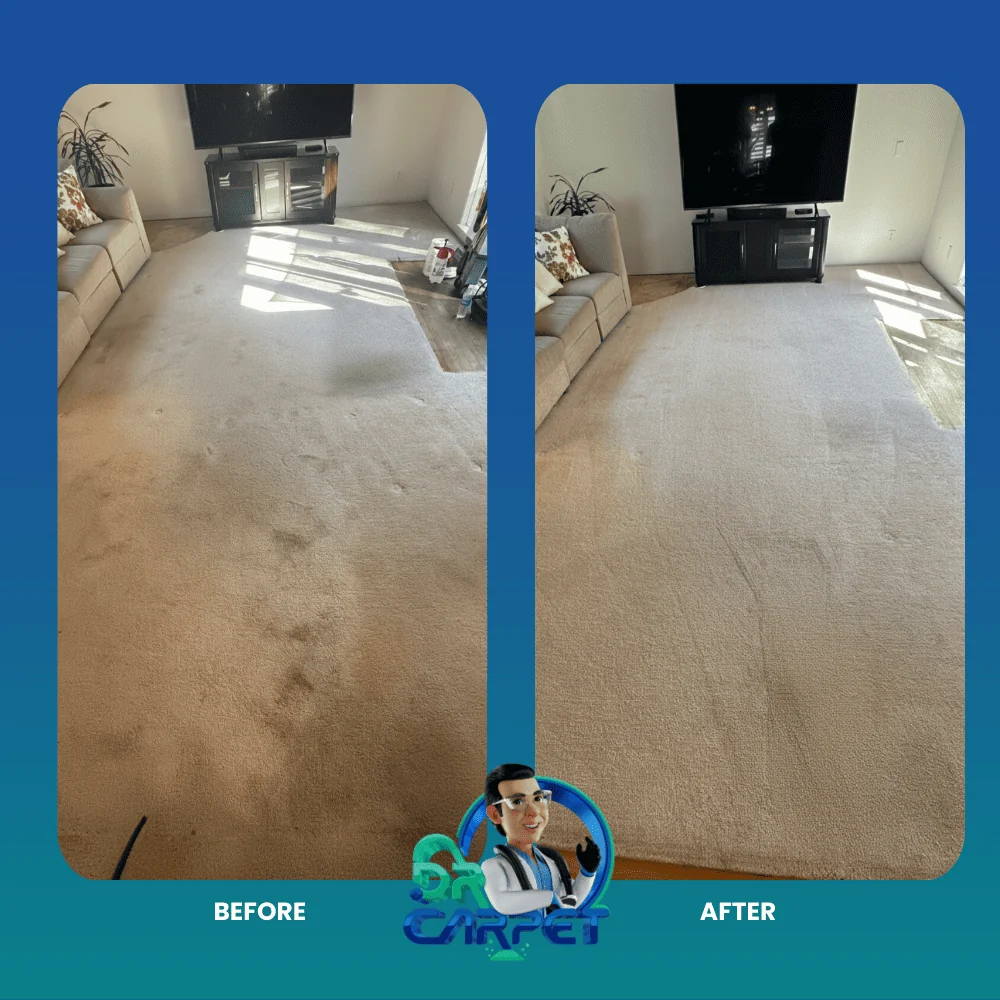
Inspection, treatment and extraction across Walnut Creek and the East Bay. Tap a video to play it.

Pet urine treatment: common questions
Why does the urine smell come back after cleaning?
Usually because contamination remains below the surface, in the backing, padding or subfloor, or because a product only masked the odor. Odors can become more noticeable on humid days.
Do enzyme treatments always remove pet urine odor?
Not always. An enzyme product has to reach the deposit and stay in contact for the time and conditions its manufacturer specifies. Results depend on how deep the urine went, how old it is and what was used before.
Does an enzyme treatment disinfect the carpet?
Not automatically. Cleaning, deodorizing and disinfecting are different. Antimicrobial claims depend on a product’s EPA registration and label directions.
Why is the urine stain still there after the odor is gone?
Urine can permanently change carpet dyes and damage some fibers. Removing the deposit cannot recreate dye that has been altered, so a stain can remain after successful odor treatment.
When does the carpet pad need to be replaced?
When accidents are repeated, odor persists after appropriate treatment or contamination is found beneath the carpet, the inspection may show that the affected padding needs replacing. It is not automatic for every spot.
Can a blacklight prove the urine is gone?
No. A blacklight is an inspection aid. The IICRC notes that fluorescence may remain after professional cleaning and does not by itself prove incomplete removal.
Odor, stain or both? Start with an assessment.
Share your ZIP code and approximate affected area, whether the urine is from a pet or a person, whether it was a single accident or a repeated problem, how long it has been present, any products or previous treatments used, and whether your main concern is odor, staining, or both. Photos help us begin, but they cannot show how far urine has penetrated. We explain the proposed treatment, its price, and its limitations before you decide.
Pedro Andrade
Based in Walnut Creek, Dr. Carpet Cleaner serves homeowners throughout the surrounding East Bay. Urine work is where honest expectations matter most, so I explain what a treatment can achieve, what it cannot, and what is included in the price before we start. Call or text me at (925) 420-8486.
Professional treatment. Clear expectations. Respect for your home.