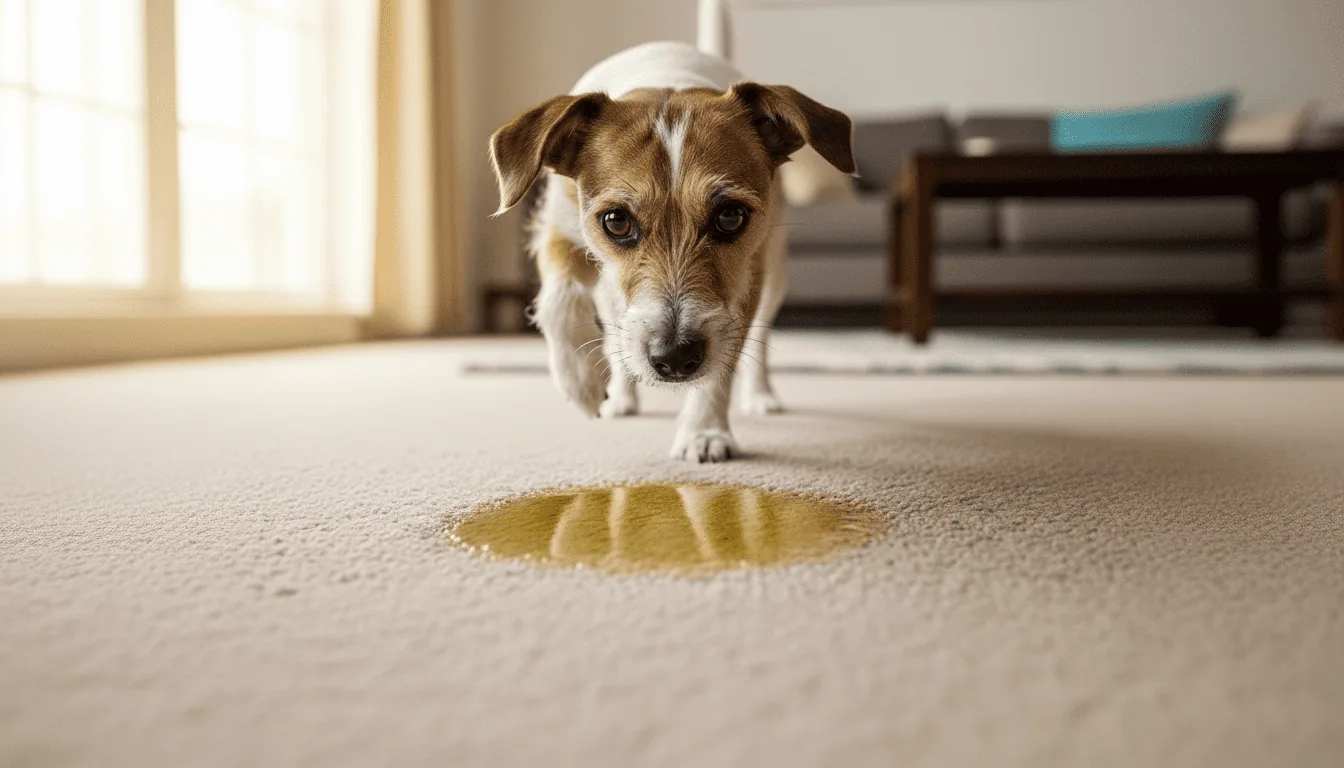
Pet Urine on a Wool Rug Over Hardwood: What Danville Homeowners Should Do First
A dog accident on a wool rug is a problem with three layers: the rug, the pad and the hardwood under it. The order you deal with them decides whether the floor survives.
Dr. Carpet · Pet urine guide
Three layers, one accident
Danville living rooms often stack three expensive surfaces in one spot: hardwood, a felt or rubber pad, and a wool or hand-knotted rug on top. When a dog or cat has an accident there, the urine does not stay in the rug. It passes through the pad and sits against the wood, where it goes dark and starts to smell within days.
The instinct is to scrub the top of the rug. That spreads the spot and pushes more liquid down. The better order is the reverse: get the rug up, dry the floor, then treat the rug properly. Below is how we handle each layer.
Why wool and hardwood react the way they do
Wool is a protein fiber and urine is alkaline. Left alone, it changes the dye and leaves a yellow or orange ring that gets harder to remove every week. Hand-knotted rugs with cotton foundations are worse, because the cotton wicks the urine along the weave and the spot grows under the surface.
Hardwood takes the damage from the other side. Urine that sits on an oak floor, common in Danville homes from the 1970s on, works into the grain and leaves a black stain that no amount of cleaning removes. At that point the only fix is sanding or replacing boards, which is why speed matters more than product on day one.
Rubber pads are not the villain, but they do trap moisture. A thin felt pad lets the floor breathe and makes the spot visible sooner, which is a small advantage in a house with pets.
What we do with each layer
The rug, the pad and the floor get different treatments, because they are different materials with different problems.
The rug: full treatment, not a spot clean
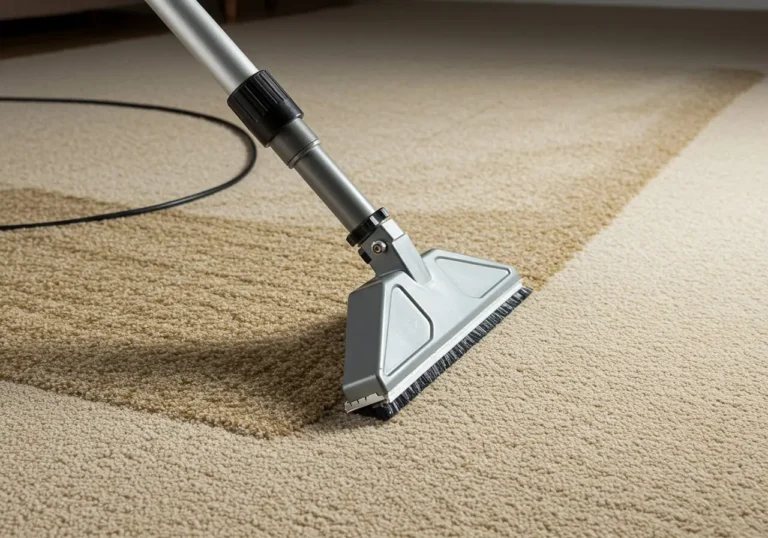
Wool rugs with urine are cleaned on both sides, with the urine salts flushed out and the fiber neutralized. A spot clean on the surface leaves the salts in the foundation, and the smell comes back with the first humid day.
The pad: replace when it is soaked
A pad that has absorbed urine cannot be cleaned in place. If the spot is small we treat it; if it has gone through, we tell you to replace that pad. It is the cheapest part of the stack.
The floor: clean, neutralize and assess
We clean and neutralize the wood with a product safe for finished hardwood, then tell you honestly if the stain has gone into the grain. If it has, a floor specialist is the next call, not another cleaning.
What to do in the first hour
Do this
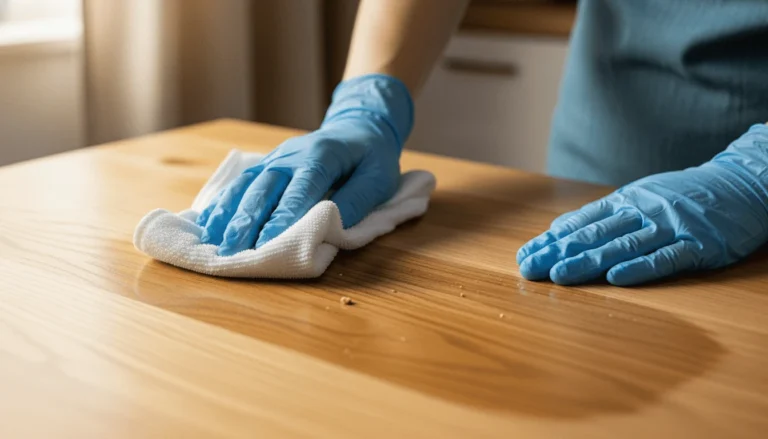
- Blot the rug with white towels, pressing, not rubbing
- Lift the rug and pad off the floor and lay them flat elsewhere
- Blot and air dry the hardwood; a fan helps
- Mark the spot on the rug with painter’s tape so it can be found later
- Call before trying any store product on wool
Avoid this
- Steam or very hot water on wool, which sets the stain
- Vinegar or ammonia on hardwood finishes
- Enzyme sprays soaked through to the floor
- Carpet-store spot removers, most are too alkaline for wool
- Putting the rug back down while anything is damp
Finding the spots you cannot see
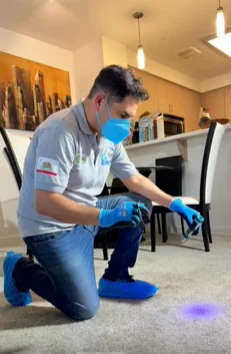
Most homes with a dog have more spots than the owner knows about. Under a UV light, old urine fluoresces, and we walk the whole rug and the floor around it before treating anything. That inspection is included in every pet urine job, and it is why the smell stays gone instead of moving to the next corner.
Oriental and hand-knotted rugs
Rugs with natural dyes get a dye stability test first. Some older rugs from Danville estates bleed when they are wetted, and the fix for that is a controlled wash with a dye-set, not a quick clean on site. We tell you which one your rug needs after looking at it.
The honest version. If urine has sat on hardwood for weeks and the wood is black, cleaning will not bring the color back. We will say so before charging you for a treatment, and point you to a refinisher.
We treat pet urine on rugs, carpet and upholstery in Danville, Alamo and Blackhawk. See the pet urine treatment, Oriental rug cleaning and odor control pages.
Pet urine on rugs in Danville: common questions
Can you remove the smell completely?
From the rug, yes, when the urine salts are flushed out and neutralized rather than masked. From hardwood, it depends on how long it sat; we tell you after the inspection.
Does the rug have to leave the house?
For a small fresh spot, no. For wool rugs with several spots or any hand-knotted rug, a full wash gives a better result than cleaning on the floor.
Will the treatment change the color of my wool rug?
We test the dyes first. Enzymes and neutralizers used correctly do not change the color; the urine itself is what shifts it, which is why speed helps.
How long until I can put the rug back?
When the rug, the pad and the floor are all completely dry. Usually one to two days for a rug cleaned on site, longer for a full wash.
Do you handle cat urine too?
Yes. Cat urine is stronger and tends to come back more, so the treatment goes a little deeper and we often recommend an odor control follow-up.
Found a spot? Send us a photo.
Text a photo of the rug and tell us the floor underneath. You get a written price and an honest read on what can be saved, usually the same day.
The Dr. Carpet team
Everything here comes from the people doing the work. Dr. Carpet was founded in 2018 by Pedro Andrade, trained at Jon-Don and certified by the IICRC, and we still follow the same rule on every job: inspect first, pick the right chemistry, extract thoroughly and finish with pH neutralization. We clean homes and businesses across Contra Costa County and the Tri-Valley, with a written price before anyone starts.