Our 11-Step Carpet & Upholstery Cleaning Process
We do not just clean carpets. We inspect them, understand the material, identify the problem and then choose the correct treatment.
Eleven steps, in this order
The same process applies to carpet, upholstery, couches, mattresses, rugs, chairs and ottomans, with the chemistry and moisture adjusted to each material.
- Step 1 of 11
Professional inspection
Before any cleaning starts, we check the fiber type, the general condition, high-traffic areas, spots and stains, urine, odors, wear, discoloration and any permanent damage. When needed we use a UV light to find urine that is invisible in normal light. We also check whether a mark is removable soil or damage such as dye loss, bleaching, fiber damage or urine discoloration. This inspection sets the chemistry, the temperature, the level of agitation and the treatment.
- Step 2 of 11
Professional vacuuming
Dust, hair, sand, pet hair, dry soil and loose particles come out first. Removing as much dry soil as possible before adding moisture makes a big difference to the final result.
- Step 3 of 11
Heavy-duty pre-spray
We apply a professional pre-spray suited to the fiber, the amount of soil and the condition of the carpet. It breaks down and suspends grease, body oils, built-up soil, residue and contaminants. Chemistry must match the fiber and the soil.
- Step 4 of 11
Mechanical agitation
Professional equipment such as a counter-rotating brush (CRB) works the chemistry deep into the fibers and loosens the soil before extraction. Steam cleaning works better when the soil is already broken down and suspended.
- Step 5 of 11
Spot, stain and urine treatment
Areas that need specific attention are treated one by one: food and drink stains, grease, organic stains, pet urine, odor spots and unknown stains. With urine, the goal is to treat the source, not mask the smell, using enzyme treatment and products that reach the carpet and, depending on severity, the backing or pad. Some stains are permanent: cleaning removes soil and contamination, but it cannot rebuild fibers or color that are already damaged.
- Step 6 of 11
Hot water extraction
Hot water, controlled pressure, rinsing and strong vacuum extraction remove the dirt, suspended soil, cleaning chemicals, residue and contaminants. Steam cleaning is only one step of our process.
- Step 7 of 11
Double extraction and dry passes
After the extraction we make extra vacuum passes to pull out as much moisture as possible. That improves drying time, the final appearance and moisture control.
- Step 8 of 11
Deodorizing and antibacterial treatment
When appropriate, a complementary treatment for odor control and hygiene. The goal is not to perfume the room but to complete the cleaning.
- Step 9 of 11
pH neutralization
One of the main differences at Dr. Carpet. After using alkaline chemistry, we neutralize the carpet to about pH 7 to 7.5. That removes alkaline residue, stabilizes the fiber, leaves the carpet softer, reduces sticky residue and slows down rapid resoiling. A clean carpet should not be left full of cleaning residue.
- Step 10 of 11
Carpet grooming
The fibers are groomed after cleaning to align the pile, improve the appearance, spread any treatment evenly and help the carpet dry uniformly.
- Step 11 of 11
Turbo drying
Professional air movers speed up drying and shorten the time the carpet stays damp.
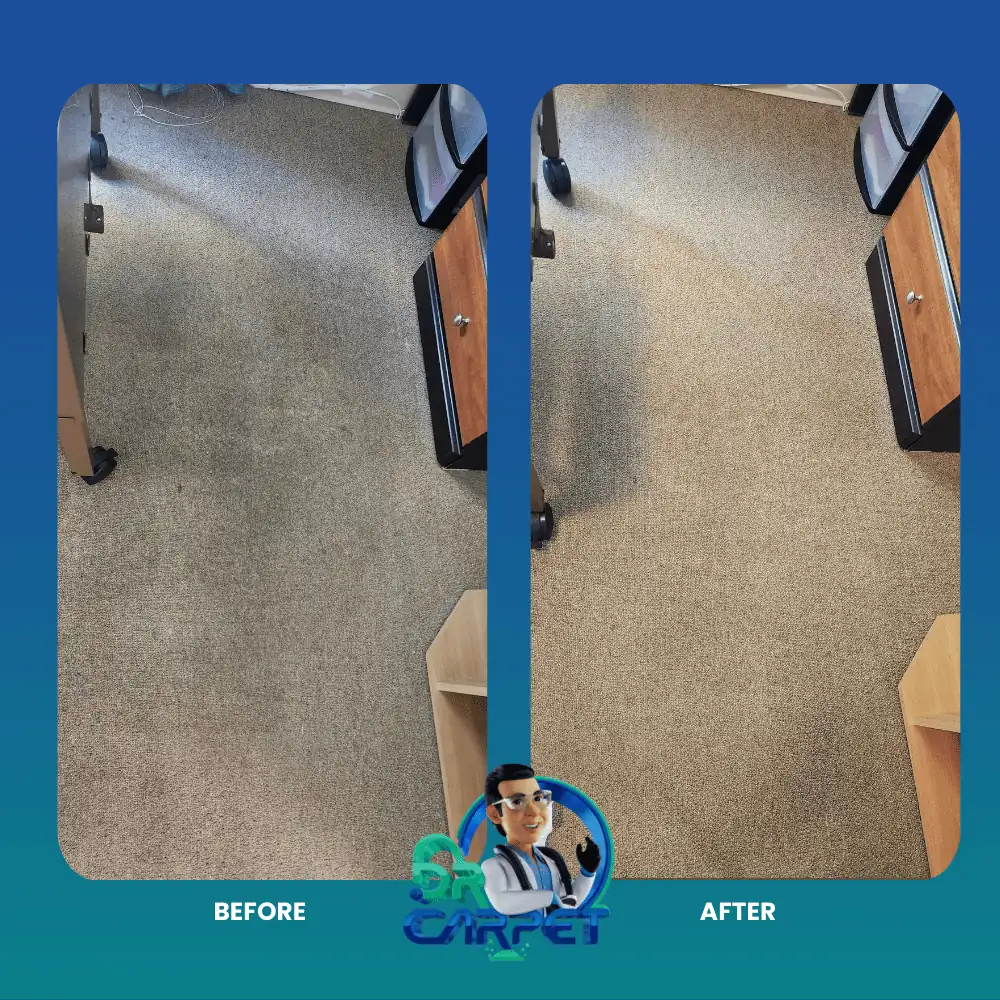
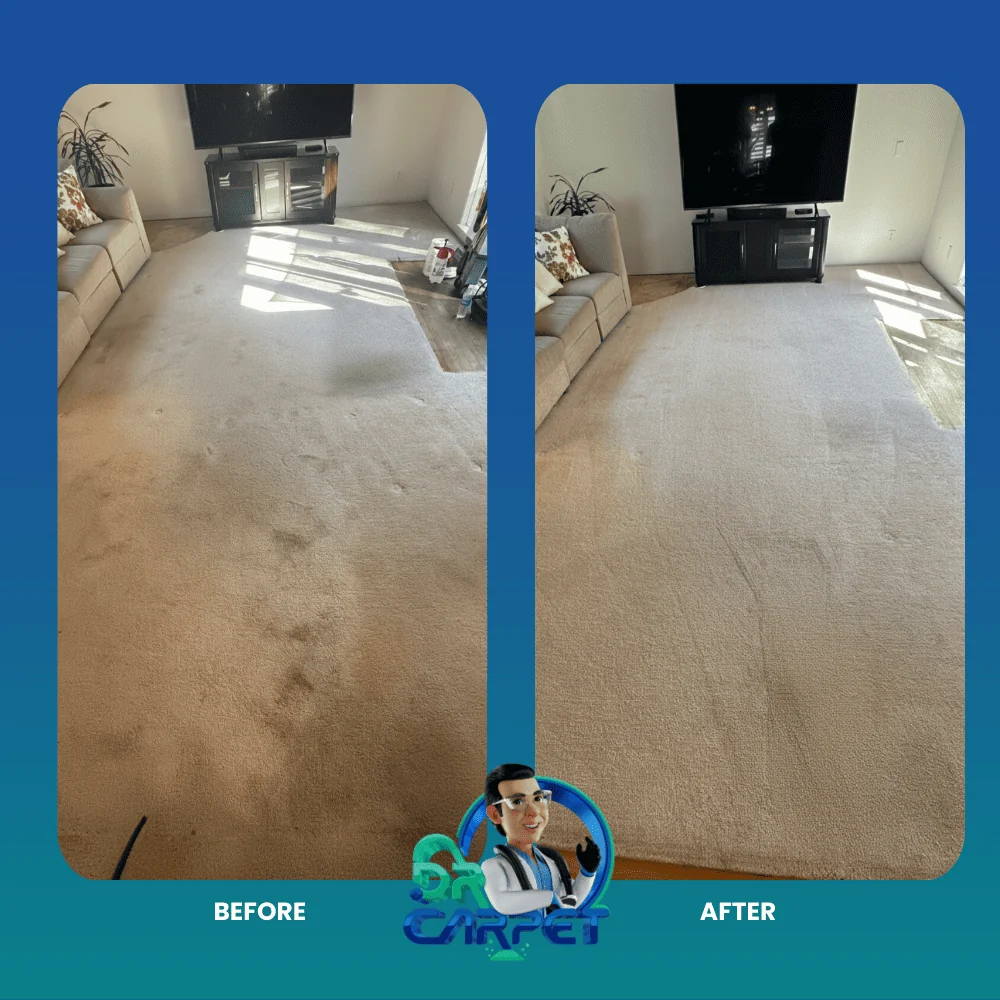
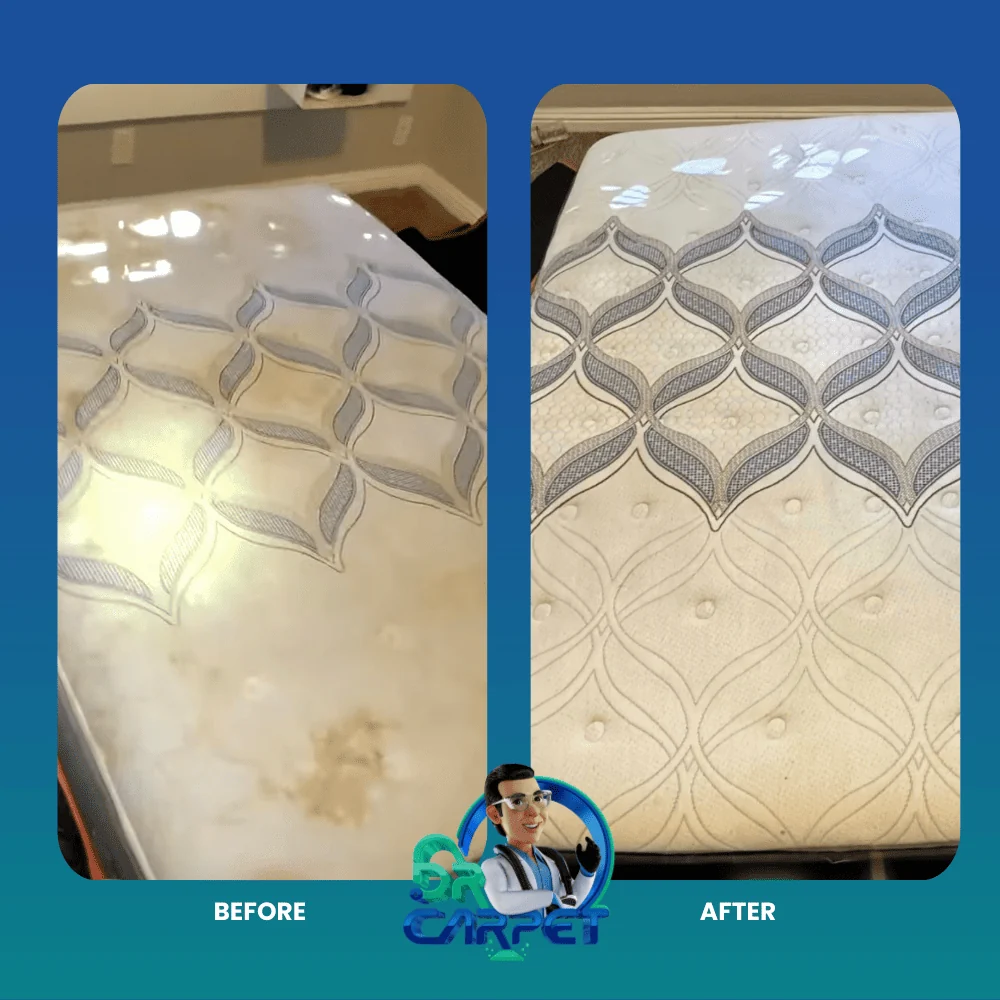
Before and after

Exterior work follows a process too
Exterior windows: inspection, frame and track cleaning, premium window shampoo, walnut pad agitation, boar’s hair brush with purified water, a 0 TDS final rinse and a quality check. Hard-water deposits, paint, cement and silicone are handled as a separate glass restoration service.
Solar panels: inspection, pre-rinse, a panel-safe cleaning solution when needed, soft brushing and a 0 TDS pure water rinse that dries without spots.
Why we finish with 0 TDS pure water
- Tap water carries calcium, magnesium and silica. When it dries on glass, those minerals stay behind as spots.
- Our filtration system strips the dissolved solids out, down to about 0 TDS (total dissolved solids).
- With nothing left in the water, the glass dries on its own without mineral spots, and nobody has to wipe it with a towel.
- Water-fed poles carry the pure water up to about 40 feet, so most second-story glass is cleaned from the ground.